 |
 |
 |
 |
 |
 |
 |
 |
 |
 |
 |
 |
 |
 |
 |
 |
Science
| Students are often attracted to the vast body of knowledge our culture associates with science. Science teachers feel pressure to deliver the content of their curriculum within a time frame that is often inadequate. Preoccupations with science content may actually catalyze scientific illiteracy. Rather than being taught the ways that science arrives at its conclusions, students are often taught the conclusions at which science arrives. A deep and meaningful understanding of science does not come from learning its content alone, rather, one needs an awareness of how scientific knowledge is gathered and accepted. It is our hope that the following articles will help students and teachers explore how science works. | |
Click
on the title to select an article. |
|
The
Nature of Science: Methods for Seeking Natural Patterns in the Universe Using Rationalism and Empiricism Michael D. Viney
|
|
A Philosophy of Science. Originally presented as part of the show: "The Art of Science: An Exhibit Where Science and Art Meet," September 29, 2007 at The Little Room, 108 W. 5th, Pittsburg, Kansas. Donald
Wayne Viney received the Ph.D. in philosophy from the University
of Oklahoma in 1982. He is professor of philosophy
at Pittsburg State University (Pittsburg, Kansas) where he
has taught courses in philosophy and religion since 1984. For
more information see: Pittsburg
State University |
|
| Wayne
Viney received his Ph.D. in psychology with a minor in the
history and philosophy of science from the University of Oklahoma
in 1964. He is emeritus professor and emeritus university distinguished
teaching scholar at Colorado State University where he continues
to teach part-time and conduct research in the history of psychology
and the history of the relations between science and religion. |
|
Understanding Science: How Science Really Works is a project of the University of California Museum of Paleontology. This site is an excellent resource for teachers and students. |
|
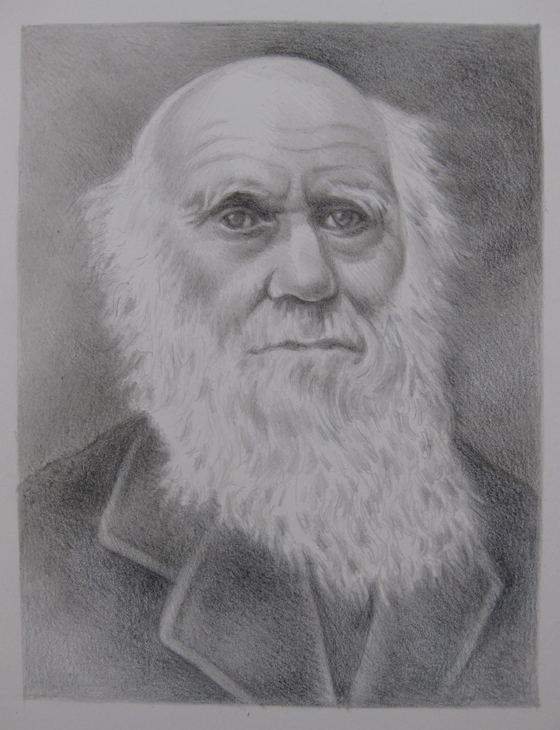 Pencil Sketch of Darwin Michelle Bakay 2009 |
|
| The sketch was inspired by a photograph of Darwin, circa 1878, taken by Elliot and Fry of London. The photograph was taken at Down House and is now part of the Richard Milner Archive. |